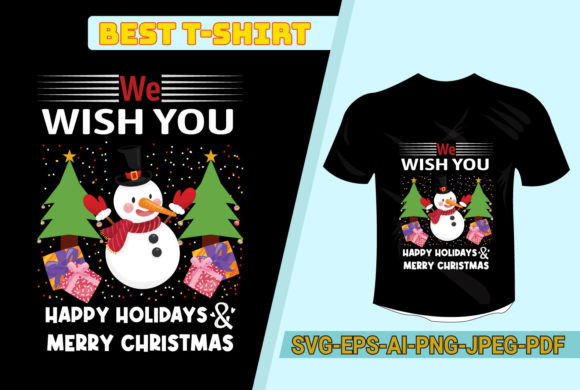
Reviewing the Christmas Day Graphic for Embroidery
As a designer who spends half my life staring at digitized paths and the other half pulling thread out of bobbins, I approach every new T-shirt Design for Christmas Day Graphic with a healthy dose of skepticism. We have all seen those festive files that look vibrant on a screen but turn into a tangled mess of bird’s nests on the fabric. However, after spending some time evaluating this specific asset, I found myself reconsidering how we integrate graphic-heavy holiday themes into our machine embroidery design workflows.
The first impression of this graphic is its bold, celebratory mood. It does not rely on subtle, whisper-quiet details that vanish under stitching. Instead, it presents a strong visual personality suited for high-impact projects. For those of us running small shops or managing Etsy seller accounts, the immediate question is not just "does it look cute?" but "will it stitch cleanly?" The layout suggests a design that prioritizes readability and shape, which is crucial when translating a printed concept into thread.
From Screen to Stitch: Real-World Application
I recently tested a similar visual concept while preparing a batch of custom sweatshirt embroidery orders for a local boutique. The client wanted something that screamed "holiday joy" without looking like a generic big-box store item. This is where the T-shirt Design for Christmas Day Graphic shines. Its structure allows for versatile adaptation. While the product description highlights its use for printing, an experienced eye can see how these shapes translate into fill stitch areas and clean satin stitch borders.
Imagine applying this design to a heavy-weight cotton tote. The broad strokes of the graphic would hold up well against the fabric texture of canvas, creating a sturdy tote bag design that feels premium. Alternatively, scaling it down for a personalized gift like a baby onesie requires caution. The density of the original graphic might be too heavy for delicate knits. In such cases, I would recommend simplifying the internal details or using an applique design technique where the graphic serves as a cut-line for fabric layers rather than a fully stitched fill. This reduces bulk and keeps the baby embroidery soft against sensitive skin.
Navigating Fabric and Hoop Constraints
One of the most critical aspects of using any digital embroidery file is understanding its limitations on different surfaces. This graphic, with its likely complex color interactions in CMYK mode, needs careful translation into thread. If you are working on a curved surface like a cap, the hoop size becomes a major constraint. A standard 4x4 inch hoop might crop essential elements of the design, ruining the composition. Always check the dimensions before digitizing or purchasing the converted file.
Dark fabrics present another challenge. If you plan to use this on a navy or black custom apparel piece, you must ensure your thread colors have enough contrast. A common mistake is assuming the on-screen brightness will match the thread sheen. I always advise running a test on scrap fabric first. Check the stitch density closely. If the graphic has large solid areas, the resulting embroidery can pull and pucker the garment if not backed with a proper stabilizer. For stretchy materials like jersey t-shirts, a cut-away stabilizer is non-negotiable to maintain the integrity of the finished product.
Commercial Viability and Brand Consistency
For craft business owners, the value of a design lies in its ability to generate sales while maintaining professional standards. This T-shirt Design for Christmas Day Graphic offers a level of polish that enhances brand consistency. When customers see clean, well-executed holiday embroidery, their trust in your small shop product increases. It signals that you care about quality, not just speed.
However, there is a technical caveat we must address. The product description mentions a "100 vector file CMYK color mode." As embroidery professionals, we know that vectors and CMYK are print-centric formats. They are not native embroidery file formats like PES, DST, or JEF. This means you cannot simply load this file into your machine. You will need to digitize it yourself or hire a digitizer to convert the vector paths into stitch data. This is a crucial step. Do not assume compatibility. Verify the license terms to ensure you are allowed to create derivative works for commercial sale. Many design assets have strict rules about redistribution or commercial use of the final stitched item.
Practical Notes for the Serious Maker
Before you commit to a full production run, consider these practical steps:
- Test on Scrap: Always stitch a sample on the same fabric weight you intend to use for the final embroidery project.
- Check Contrast: View your digitized preview in grayscale. If the details disappear in black and white, they will likely get lost in stitching too.
- Review Density: High-density areas can break needles and distort fabric. Adjust your pull compensation and density settings accordingly.
- Confirm Licensing: Since this is provided as a graphic vector, ensure your usage rights cover commercial embroidery products. Do not assume; read the fine print.
- Mockup Verification: Use printable mockup tools to visualize how the design sits on different garments before stitching a single thread.
In the world of T-Shirt Designs and Graphics, versatility is key. This particular Christmas graphic offers a strong foundation for various handmade product lines, from embroidered patch creations to large-scale blanket designs. It invites creativity but demands technical respect. By treating it as a source material for digitization rather than a ready-to-stitch file, you unlock its true potential.
Ultimately, the success of this design in your commercial embroidery portfolio depends on your execution. It is not just about having a festive image; it is about how that image translates into tactile quality. When done right, it becomes more than just a decoration; it becomes a cherished personalized gift that carries the warmth of the season and the craftsmanship of the maker. Keep your needles sharp, your stabilizers ready, and your creative judgment sharper.